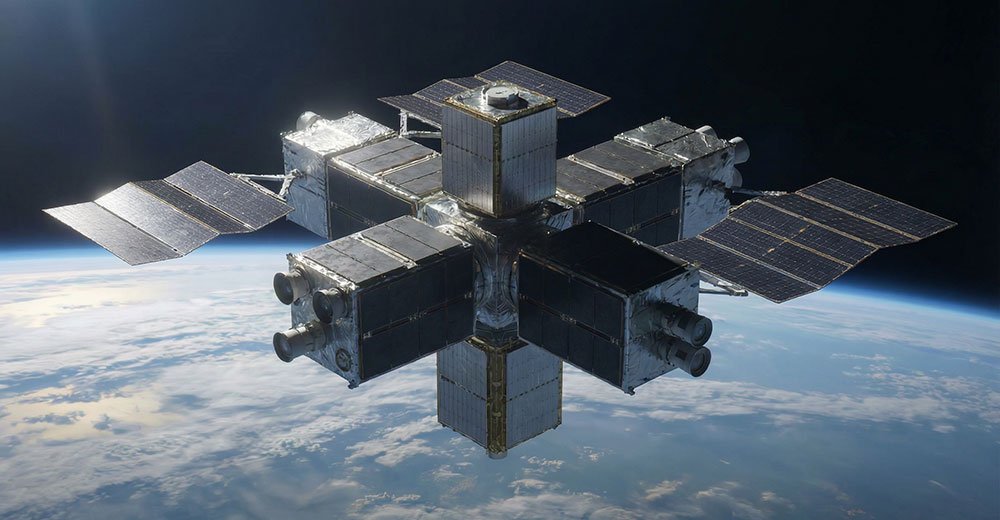
AI data center in space by...?
December 31, 2027
Order Book
December 31, 2027
Resolution Criteria
This market will resolve to “Yes” if any orbital data center is successfully launched by the specified date, 11:59 PM ET. Otherwise, this market will resolve to “No”. “Orbital data center” refers to any spacecraft, satellite, or equivalent technology carrying computing infrastructure that is launched into Earth’s orbit for the purpose of providing data-center, cloud-computing, or artificial intelligence computing services and which includes at least 100 data-center-grade AI accelerators, GPUs, TPUs, or substantially equivalent compute processors, (e.g. NVIDIA H100 GPUs, Google TPUs, or equivalent or successor chips). “Successfully launched” refers to any launch which successfully places a qualifying orbital data center into Earth’s orbit. The primary resolution source for this market will be a consensus of credible reporting.
No orbital data centre carrying at least 100 data-centre-grade AI accelerators has been successfully launched into Earth's orbit as of current reporting, making this a genuinely open question in prediction markets. Trading is heavily concentrated on the end-2027 window as the more heavily-backed resolution date, with the end-2026 outcome attracting considerably less volume. Resolution requires credible reporting consensus confirming a qualifying launch before the respective deadline.
Market structure
The market presents two binary yes/no outcomes tied to two separate deadlines — end of 2026 and end of 2027 — each resolving independently on whether any qualifying orbital data centre reaches orbit by 11:59 PM ET on that date. Volume is concentrated on the later 2027 deadline. Resolution draws on a consensus of credible reporting rather than a single official source. No contingency fallback is specified beyond the binary yes/no structure.
Background
The concept of space-based computing infrastructure has moved from theoretical to actively pursued over the past several years, driven by interest in removing latency constraints, accessing solar power continuously, and sidestepping terrestrial cooling and land costs. Several aerospace and technology organisations — including startups and established defence contractors — have publicly discussed or announced programmes targeting orbital compute. The rapid commercialisation of low Earth orbit, led by reusable launch vehicles, has substantially reduced the cost of placing hardware into orbit. Meanwhile, the surge in demand for AI accelerator capacity has intensified interest in any novel deployment environment. No orbital data centre meeting the market's threshold of 100 or more data-centre-grade AI accelerators has been confirmed as successfully launched at the time of writing.
Key factors
The qualifying threshold — at least 100 data-centre-grade AI accelerators such as NVIDIA H100s or equivalent — sets a materially higher bar than a single-chip demonstration mission. Several structural factors bear on resolution. First, launch vehicle availability and reliability determine whether hardware can reach orbit on schedule; delays in the broader commercial launch market cascade directly into programme timelines. Second, thermal management in the vacuum of space presents engineering challenges distinct from terrestrial data centres, potentially extending development cycles. Third, regulatory approvals for orbital operations, spectrum licensing, and export controls on high-performance compute hardware add procedural dependencies. Fourth, the financial viability of orbital compute as a commercial service affects whether private ventures proceed to launch or remain in development. Fifth, any successful launch must be reported by credible outlets in sufficient consensus to trigger resolution — a stealth or classified launch would not qualify under current criteria. Each of these factors operates independently and could accelerate or delay resolution.
FAQ
How is the 'AI data center in space' market resolved?
The market resolves Yes if credible reporting reaches consensus that any spacecraft or satellite carrying at least 100 data-centre-grade AI accelerators — such as NVIDIA H100s, Google TPUs, or equivalent chips — has been successfully placed into Earth's orbit before the relevant deadline. A launch that fails to reach orbit does not qualify.
When does the orbital data centre market resolve?
There are two separate resolution windows: end of 2026 (11:59 PM ET on 31 December 2026) and end of 2027 (11:59 PM ET on 31 December 2027). Each outcome resolves independently on whether a qualifying launch has occurred by its respective deadline.
What happens if a qualifying launch occurs but is not widely reported?
Resolution requires a consensus of credible reporting. A launch that is classified, undisclosed, or confirmed only by a single non-mainstream source would not trigger a Yes resolution. The hardware must reach orbit and its deployment must be verifiable through multiple credible outlets.
What does the market currently show for orbital data centre timelines?
The end-2027 outcome is the more heavily-backed of the two, reflecting broader sentiment that if an orbital data centre meeting the qualifying threshold is launched at all within this window, 2027 is the more plausible timeframe. The end-2026 outcome attracts considerably less market volume.
Paridesk is not a regulated financial advisor. The information above is for informational purposes only and does not constitute financial, investment, or trading advice. Prediction markets carry risk of total loss. Past patterns do not guarantee future outcomes.
Related Markets






December 31, 2027
26%