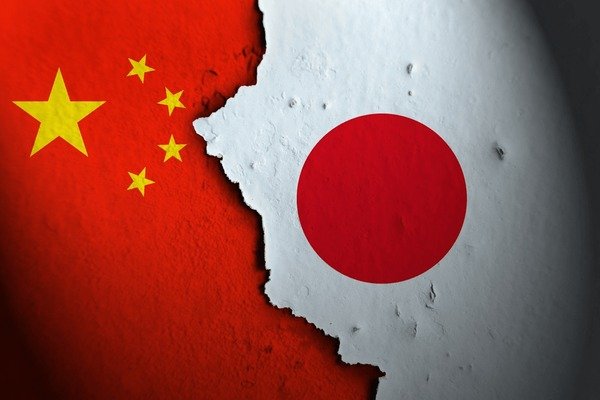
China x Japan military clash before 2027?
China x Japan military clash before 2027?
Order Book
China x Japan military clash before 2027?
Resolution Criteria
This market will resolve to "Yes" if there is a military encounter between the military forces of China (People's Republic of China) and Japan between November 17, 2025, and December 31, 2026, 11:59 PM ET. Otherwise, this market will resolve to "No". A "military encounter" is defined as any incident involving the use of force such as missile strikes, artillery fire, exchange of gunfire, or other forms of direct military engagement between Chinese and Japanese military forces. Non-violent actions, such as warning shots, artillery fire into uninhabited areas, or missile launches that land in territorial waters or pass through airspace, will not qualify for a "Yes" resolution. Intentional ship ramming that results in significant damage to (e.g., a hole in the hull) or the sinking of a military ship by another will count toward a "Yes" resolution, however minor damage (scrapes, dents) will not. Note: the China Coast Guard (CCG) is part of the military, however Japan Coast Guard (JCG) is not. The resolution source for this market will be a consensus of credible reporting.
Prediction markets currently place this outcome in the heavily minority-backed range, with trading concentrated on a 'No' resolution. A 'Yes' outcome requires an actual use of force — missile strikes, gunfire, or serious ship ramming — between Chinese and Japanese military forces before 31 December 2026. The market resolves on a consensus of credible reporting.
Market structure
This is a binary market with two outcomes: 'Yes' (a qualifying military clash occurs) and 'No' (it does not). Volume is heavily concentrated on 'No'. The resolution bar is specific: non-violent incidents, warning shots, and minor collisions do not qualify. The China Coast Guard counts as a military force; the Japan Coast Guard does not. Resolution is based on a consensus of credible reporting, with a deadline of 31 December 2026.
Background
Tensions between China and Japan have centred primarily on the Senkaku Islands (known in China as the Diaoyu Islands), a group of uninhabited islets in the East China Sea administered by Japan but claimed by Beijing. Chinese Coast Guard and maritime militia vessels have conducted increasingly frequent and assertive patrols in the area, prompting Japanese responses. The two countries also share overlapping interests and anxieties regarding Taiwan, trade routes, and US alliance commitments in the Indo-Pacific. Despite elevated rhetoric and regular maritime friction, the two nations have maintained diplomatic channels and economic interdependence that have historically dampened escalation. No direct military exchange has occurred in the post-war period.
Key factors
Several structural factors shape whether a qualifying incident could occur before the deadline. The frequency of Chinese Coast Guard incursions into waters around the Senkaku Islands creates regular friction points; any escalation involving the CCG — which is classified as military under this market's resolution criteria — and Japanese Self-Defence Forces could qualify. Japan's Coast Guard, however, is excluded, meaning most routine maritime confrontations would not resolve the market 'Yes'. Political developments in both countries, including leadership decisions, nationalist pressure, and shifts in US security commitments, could alter risk calculus on either side. Accidental escalation — a collision, a misidentified aircraft, or a panicked response — represents a distinct pathway from deliberate escalation. Regional flashpoints beyond the Senkakus, including any deterioration around Taiwan that draws in Japanese forces, could also create qualifying scenarios. The relatively short resolution window — ending December 2026 — limits the time horizon over which these factors must interact.
FAQ
How is the China–Japan military clash market resolved?
The market resolves 'Yes' if credible reporting confirms a use of force — such as missile strikes, gunfire, or intentional ship ramming causing significant hull damage — between Chinese and Japanese military forces. Non-violent incidents, warning shots, and minor collisions do not qualify. The China Coast Guard counts as military; Japan's does not.
When does the China–Japan military clash market resolve?
The market resolves at 11:59 PM ET on 31 December 2026. Any qualifying incident must occur between 17 November 2025 and that deadline. Resolution is triggered by a consensus of credible reporting confirming a qualifying military encounter.
What happens if Chinese and Japanese coast guard ships collide near the Senkaku Islands?
A collision involving the China Coast Guard — which counts as military under the resolution criteria — could qualify only if it involves intentional ramming causing significant damage, such as a hole in the hull or sinking. Minor scrapes or dents do not qualify. Japan's Coast Guard is explicitly excluded from the military definition entirely.
What does the China–Japan military clash market currently show?
Trading is heavily concentrated on a 'No' resolution, placing the 'Yes' outcome in the heavily minority-backed range. This reflects the view that, despite ongoing maritime friction, a qualifying direct military exchange before the end of 2026 remains a low-probability outcome in current market pricing.
Paridesk is not a regulated financial advisor. The information above is for informational purposes only and does not constitute financial, investment, or trading advice. Prediction markets carry risk of total loss. Past patterns do not guarantee future outcomes.
Related Markets




China x Japan military clash before 2027?
6%