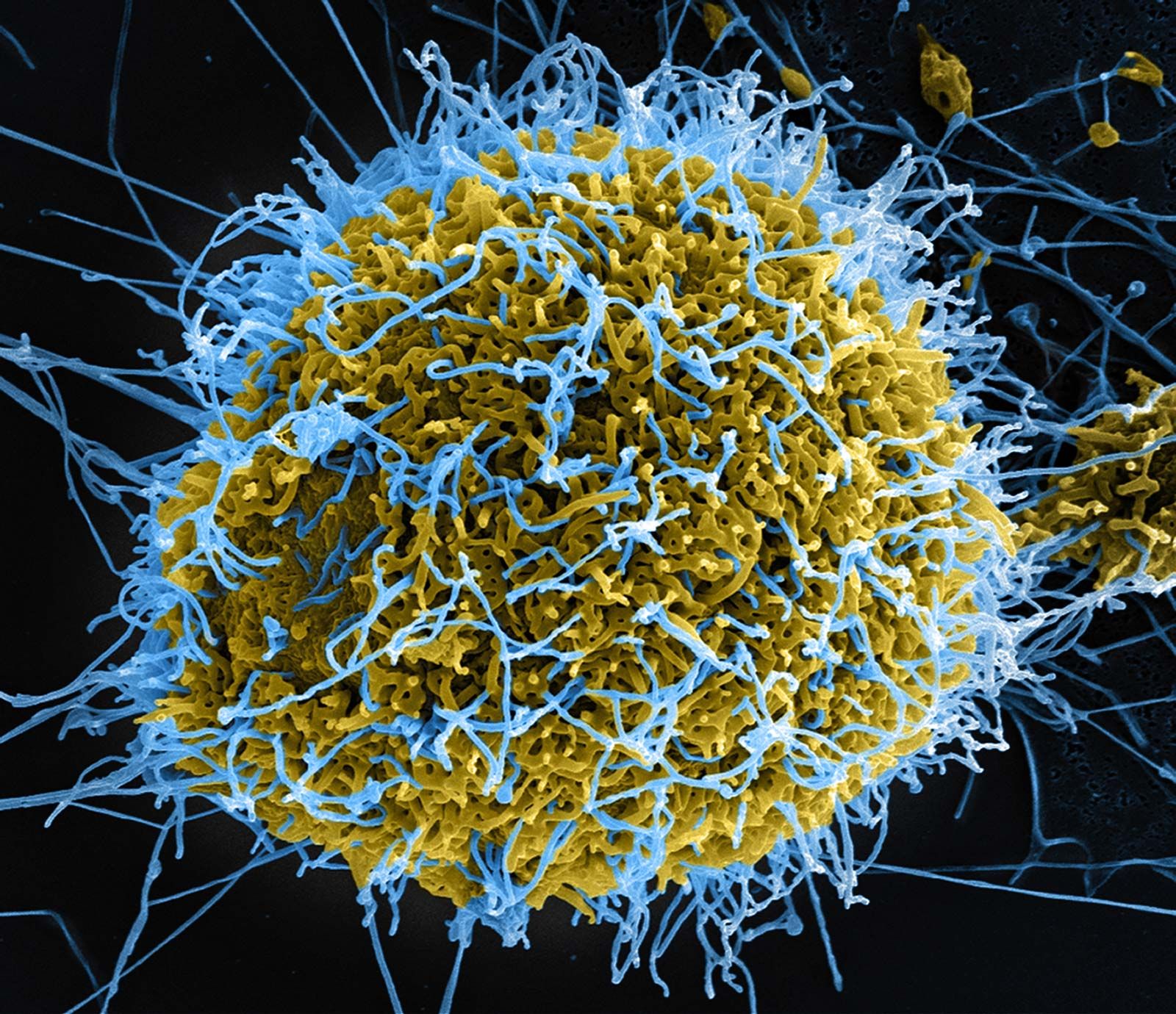
Ebola pandemic in 2026?
Ebola pandemic in 2026?
Order Book
Ebola pandemic in 2026?
Resolution Criteria
This market will resolve to “Yes” if the World Health Organization explicitly characterizes Ebola virus disease, Ebola, any Ebola strain, or any outbreak of ebola as a “pandemic” in an official public communication between market creation and December 31, 2026, 11:59 PM ET. Otherwise, this market will resolve to “No”. An explicit characterization includes official WHO statements, reports, press briefings, or publications that clearly describe the outbreak as a “pandemic.” A Public Health Emergency of International Concern (PHEIC) alone will not qualify unless it is also described as a pandemic. The primary resolution source for this market will be official WHO communications. A consensus of credible reporting may also be used.
Prediction markets place Ebola being declared a pandemic in 2026 as a heavily marginalised outcome, with the overwhelming weight of trading concentrated on a 'No' resolution. The market resolves 'Yes' only if the World Health Organisation explicitly characterises Ebola or any of its strains as a 'pandemic' in an official communication before 31 December 2026. A PHEIC declaration alone does not qualify. Resolution is sourced from official WHO communications.
Market structure
This is a binary market with two outcomes: 'Yes' and 'No'. Volume is heavily concentrated on 'No', with 'Yes' representing a small fringe of trading activity. Resolution requires an explicit WHO pandemic characterisation — not merely a PHEIC or emergency declaration — in an official statement, report, press briefing, or publication issued before 31 December 2026. A consensus of credible reporting may serve as a supplementary resolution source.
Background
Ebola virus disease has caused several significant outbreaks since its identification in 1976, predominantly in Central and West Africa. The 2014–2016 West Africa outbreak was the largest in recorded history, killing more than 11,000 people, and prompted the WHO to declare a PHEIC. Subsequent outbreaks in the Democratic Republic of Congo, including a major episode in 2018–2020, again triggered PHEIC declarations. Despite their severity, none of these outbreaks were officially characterised as pandemics by the WHO. As of early 2025, no active Ebola outbreak had reached the scale or geographic spread historically associated with pandemic classification. The WHO's use of the term 'pandemic' has historically been reserved for diseases demonstrating sustained global spread, a threshold Ebola outbreaks have not reached.
Key factors
The central factor governing resolution is whether any Ebola outbreak achieves the geographic reach and transmission characteristics that would prompt the WHO to apply pandemic language — a threshold the organisation has not previously used for Ebola. Key dependencies include whether a new outbreak emerges in 2026, its size and spread beyond endemic regions, healthcare system capacity in affected countries, and the speed of international response. Vaccination availability — notably the rVSV-ZEBOV vaccine — could constrain spread if deployed rapidly. International travel patterns would determine whether sustained cross-border transmission occurs. The WHO's own institutional language preferences are also a factor: the organisation has historically been cautious in using 'pandemic' terminology. A PHEIC declaration, while a potential precursor to escalating language, does not by itself satisfy resolution criteria. Any ambiguity in WHO communications — such as using 'pandemic potential' without explicitly declaring a pandemic — would also bear on resolution.
FAQ
How is the 'Ebola pandemic in 2026' market resolved?
The market resolves 'Yes' only if the WHO explicitly uses the word 'pandemic' to describe Ebola or an Ebola outbreak in an official communication — such as a statement, report, or press briefing — before 31 December 2026. A PHEIC declaration on its own does not qualify.
When does the Ebola pandemic 2026 market resolve?
The market resolves no later than 31 December 2026. It could resolve earlier if the WHO issues a qualifying pandemic characterisation before that date. If no such characterisation is issued, it resolves 'No' at the deadline.
What if the WHO declares a PHEIC for Ebola but does not call it a pandemic?
A PHEIC alone does not satisfy resolution criteria. The WHO must explicitly describe the outbreak as a 'pandemic' in official communications. If only a PHEIC is declared without accompanying pandemic language, the market resolves 'No'.
What does the Ebola pandemic 2026 market currently show?
Volume is heavily concentrated on a 'No' resolution, with 'Yes' representing a marginalised share of trading activity. The market reflects the historically low precedent for any Ebola outbreak receiving official WHO pandemic classification.
Paridesk is not a regulated financial advisor. The information above is for informational purposes only and does not constitute financial, investment, or trading advice. Prediction markets carry risk of total loss. Past patterns do not guarantee future outcomes.
Related Markets





Ebola pandemic in 2026?
3%