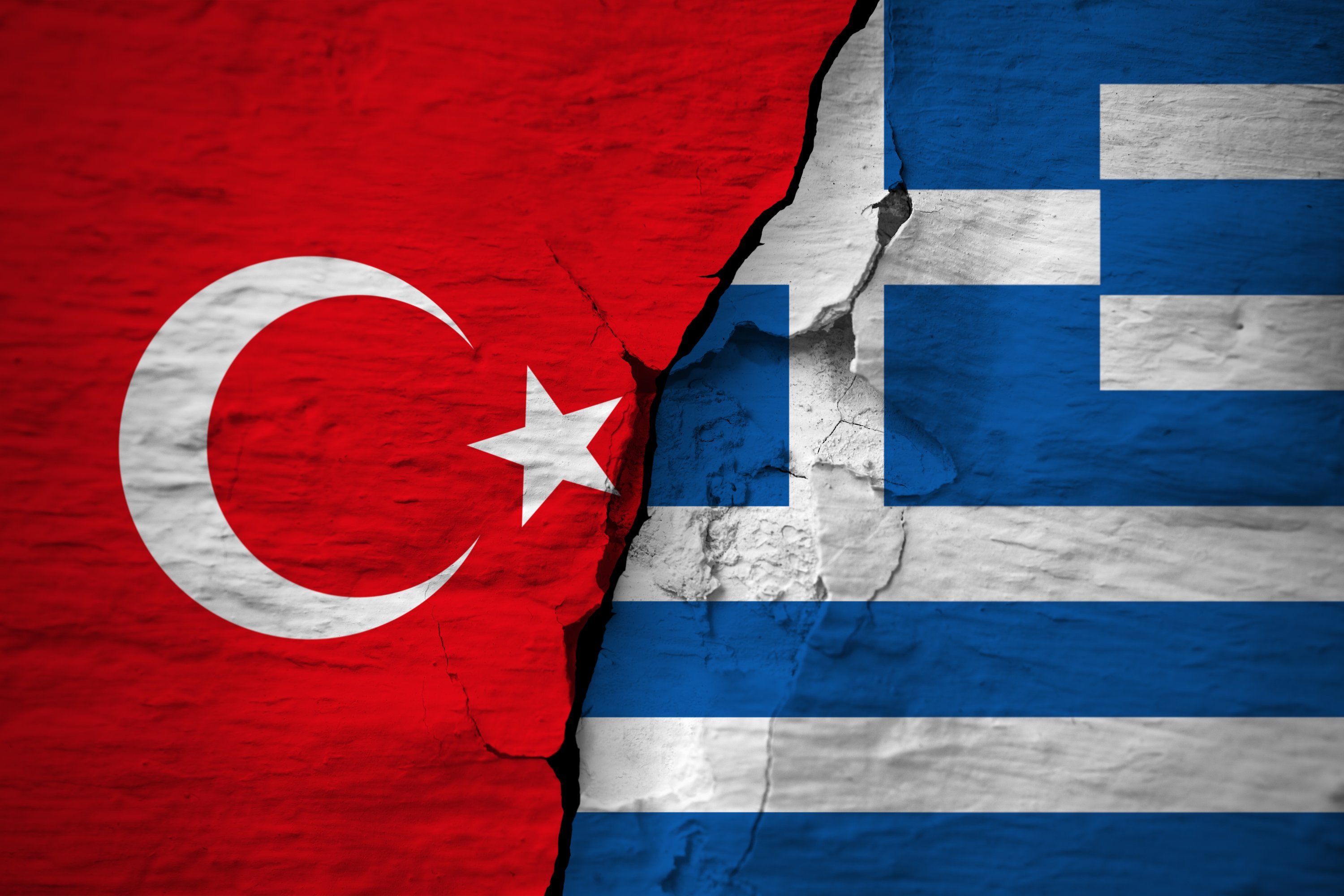
Greece x Turkey military engagement by...?
December 31
Order Book
December 31
Resolution Criteria
This market will resolve to "Yes" if there is a military engagement between the military forces of Greece and Turkey by June 30, 2026, 11:59 PM ET. Otherwise, this market will resolve to "No". A "military engagement" is defined as any incident involving the use of force such as missile strikes, artillery fire, exchange of gunfire, or other forms of direct military engagement between Greek and Turkish military forces. Non-violent actions, such as warning shots or missile launches that land in territorial waters or pass through airspace, will not qualify for a "Yes" resolution. Intentional ship ramming that results in significant damage to (e.g., a hole in the hull) or the sinking of a military ship by another will count toward a "Yes" resolution; however, minor damage (scrapes, dents) will not. Missiles or drone strikes that are intercepted will not qualify, regardless of whether they land on adversarial territory or cause damage. Similarly, surface-to-air missile strikes impacting adversarial territory will not qualify for a "Yes" resolution (although surface-to-air missiles fired at an adversarial military aircraft would qualify). The resolution source for this market will be a consensus of credible reporting.
Prediction markets place the probability of a military engagement between Greece and Turkey by 30 June 2026 at the very low end of the distribution, with volume heavily concentrated on a 'No' resolution. The market defines engagement narrowly, requiring direct use of force such as missile strikes, artillery fire, or exchange of gunfire. Resolution depends on a consensus of credible reporting before the 30 June 2026 deadline.
Market structure
This is a binary market with a single outcome tracked: whether a qualifying military engagement between Greek and Turkish forces occurs by 30 June 2026. Volume is overwhelmingly concentrated on 'No'. Resolution requires a consensus of credible reporting confirming a direct use of force meeting the precise definitional threshold. Intercepted missiles, warning shots, and minor vessel contact are explicitly excluded. The deadline is 30 June 2026.
Background
Greece and Turkey, both NATO members, have one of the most persistently tense bilateral relationships in the alliance. Disputes over Aegean airspace, continental shelf boundaries, and the status of certain islands have produced recurring incidents over decades. The two countries came close to armed conflict in 1996 during the Imia/Kardak crisis and have experienced frequent aerial intercept incidents and maritime stand-offs since. Tensions have periodically escalated around issues including migration flows through the Aegean, energy exploration rights in the eastern Mediterranean, and overflights of contested zones. Despite the chronic friction, both countries have consistently stopped short of direct military engagement, with diplomatic and NATO channels typically absorbing crises before they escalate to force.
Key factors
The resolution threshold is narrow and deliberately specific. Incidents that have historically occurred between the two countries — aerial intercepts, vessel shadowing, competing sovereignty claims — would not meet the definitional bar. For a 'Yes' resolution, an incident would need to involve confirmed direct use of lethal force: live fire exchanged, artillery deployed, missiles or drones striking a target without interception, or intentional ship ramming causing significant structural damage. Key structural factors include the state of broader regional tensions in the eastern Mediterranean, the involvement of third-party conflicts that could draw either military into proximity, domestic political dynamics in both Athens and Ankara, and the functioning of NATO de-escalation mechanisms. Any shift in Turkish foreign policy orientation or a breakdown in bilateral communication channels could alter the risk environment. The precise definitional carve-outs around intercepted munitions and surface-to-air missiles also mean that even a significant incident might not meet the resolution threshold.
FAQ
How is the Greece–Turkey military engagement market resolved?
The market resolves 'Yes' if a consensus of credible reporting confirms direct use of force — such as live gunfire, artillery, unintercepted missile or drone strikes, or ship ramming causing significant hull damage — between Greek and Turkish military forces before the deadline. Intercepted missiles, warning shots, and minor vessel contact do not qualify.
When does the Greece–Turkey military engagement market resolve?
The market resolves at 11:59 PM ET on 30 June 2026. If no qualifying military engagement is confirmed by credible reporting before that deadline, the market resolves 'No'. There is no stated fallback extension mechanism.
What happens if Greek and Turkish vessels collide or exchange warning shots?
Minor vessel contact — scrapes or dents — and warning shots explicitly do not qualify for a 'Yes' resolution under the market's definitions. Only intentional ramming causing significant structural damage such as a hull breach, or confirmed exchange of live fire, would meet the threshold.
What does the market currently show for a Greece–Turkey military engagement?
Volume is overwhelmingly concentrated on 'No', with the 'Yes' outcome representing the far tail of the distribution. The market reflects the historical pattern in which Greek–Turkish incidents have consistently stopped short of direct military engagement despite recurring tensions.
Paridesk is not a regulated financial advisor. The information above is for informational purposes only and does not constitute financial, investment, or trading advice. Prediction markets carry risk of total loss. Past patterns do not guarantee future outcomes.
Related Markets







December 31
5%