Jeonnam–Gwangju Mayoral Election Winner
Min Hyung-bae
Order Book
Min Hyung-bae
Resolution Criteria
The Jeonnam–Gwangju mayoral election is scheduled to take place on June 3, 2026. This market will resolve according to the candidate who wins this election. Interim, temporary, or caretaker mayors will not count. If the result of this election isn't known by December 31, 2026, 11:59 PM ET, the market will resolve to "Other". This market will resolve based on the result of the election as indicated by a consensus of credible reporting. If there is ambiguity, this market will resolve based solely on the official results as reported by the South Korean government, specifically the National Election Commission (https://www.nec.go.kr/).
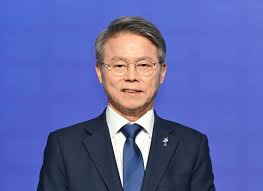
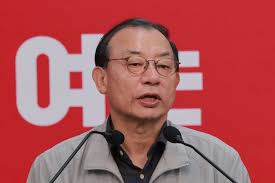
Min Hyung-bae is the heavily-backed favourite to win the Jeonnam–Gwangju mayoral election scheduled for 3 June 2026, with trading volume overwhelmingly concentrated on a single candidate. The market across 18 named outcomes shows an exceptional degree of concentration, with one other contender, Lee Jung-hyun, attracting a small share of volume. Resolution will follow the official result as certified by South Korea's National Election Commission.
Market structure
The market lists 18 possible outcomes, yet volume is heavily concentrated on a single candidate, Min Hyung-bae, making this effectively a one-sided market at present. Lee Jung-hyun holds a marginal share. Resolution is determined by the official winning candidate in the 3 June 2026 election, as confirmed by credible reporting or, where ambiguous, by the South Korean National Election Commission. Interim or caretaker appointments do not count. A fallback deadline of 31 December 2026 applies.
Background
South Korea holds its nationwide local elections on a fixed four-year cycle, with the next scheduled round falling on 3 June 2026. The Jeonnam–Gwangju contest covers the mayoral seat for Gwangju Metropolitan City, a major urban centre in the Jeolla region of south-western South Korea. Gwangju holds particular historical and political significance as the site of the May 18th Democratic Uprising of 1980, and the city has historically shown strong support for centre-left and progressive political forces. Local elections in South Korea are administered centrally by the National Election Commission, which publishes official results and certifies winners. The 2026 elections will take place against the backdrop of South Korea's evolving national political landscape following a period of significant constitutional and political turbulence at the presidential level.
Key factors
Candidate registration deadlines and any late withdrawals could shift the effective field before polling day. South Korean local elections feature both party affiliation and independent candidacies, meaning shifts in national party standings can affect local races through voter alignment and campaign resource allocation. Gwangju's historically consistent partisan lean means the dominant regional party's endorsement carries significant weight. Candidate eligibility challenges or legal disqualifications, if raised before or after polling, could affect who ultimately holds office and therefore how the market resolves. The resolution criteria explicitly exclude interim or caretaker appointments, so any vacancy or legal dispute post-election that results in a temporary officeholder rather than a confirmed winner would not trigger resolution. If official results remain contested or unreported by 31 December 2026, the market defaults to 'Other', making the NEC's certification timeline a structural dependency.
FAQ
How is the Jeonnam–Gwangju mayoral election winner market resolved?
The market resolves to whichever candidate officially wins the 3 June 2026 election, based on a consensus of credible reporting or, where ambiguous, the official results published by South Korea's National Election Commission. Interim or caretaker mayors do not qualify for resolution.
When does the Jeonnam–Gwangju mayoral election market resolve?
The election is scheduled for 3 June 2026. Resolution follows once a confirmed winner is established. If the official result is not known by 31 December 2026 at 11:59 PM ET, the market resolves to 'Other' as a fallback.
What happens if no confirmed winner is declared by the resolution deadline?
If the election result is not certified or reported by 31 December 2026 at 11:59 PM ET — due to legal challenge, recount, or extraordinary circumstance — the market resolves to 'Other' rather than to any named candidate.
What does the Jeonnam–Gwangju mayoral election market currently show?
Volume is overwhelmingly concentrated on Min Hyung-bae, making this one of the most lopsided markets in the field. Lee Jung-hyun holds a minimal share. All other candidates across the 18-outcome market account for negligible trading activity.
Paridesk is not a regulated financial advisor. The information above is for informational purposes only and does not constitute financial, investment, or trading advice. Prediction markets carry risk of total loss. Past patterns do not guarantee future outcomes.
Related Markets



Min Hyung-bae
94%