Next Secretary-General of the United Nations
Rafael Grossi
Order Book
Rafael Grossi
Resolution Criteria
A selection process is currently being held to choose the next Secretary-General of the United Nations, with the current term set to end on 31 December 2026. This market will resolve to the individual who is formally appointed as Secretary-General of the United Nations following the 2026 United Nations Secretary-General selection. To count for resolution, the individual must be formally appointed as Secretary-General of the United Nations following the 2026 United Nations Secretary-General selection. A recommendation by the United Nations Security Council alone will not be sufficient for resolution. Any interim or caretaker Secretary-General will not count toward the resolution of this market. If no such Secretary-General is appointed by June 30, 2027, 11:59 PM ET, this market will resolve to “Other”. The primary resolution source for this market will be official information from the United Nations; however, a consensus of credible reporting may also be used.
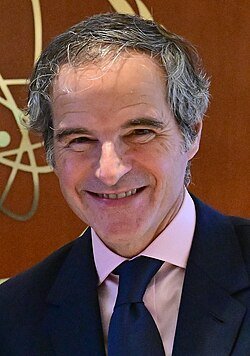
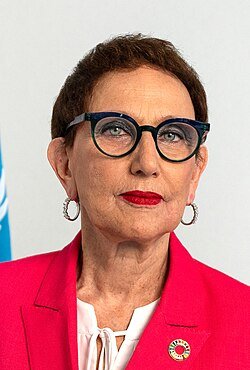
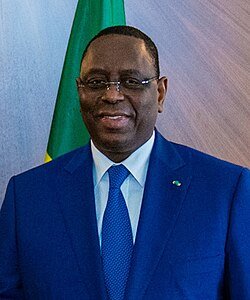
Rafael Grossi is the heaviest-backed candidate to become the next Secretary-General of the United Nations in prediction market trading, with volume heavily concentrated on his candidacy. The field also includes a small cluster of contenders, notably Rebeca Grynspan and Macky Sall. Resolution requires formal appointment by the UN General Assembly following the 2026 selection process, with a fallback deadline of 30 June 2027.
Market structure
The market covers 31 named outcomes and resolves to whichever individual is formally appointed Secretary-General of the United Nations following the 2026 selection process. Volume is heavily concentrated on a small number of candidates, with one outcome dominant. A Security Council recommendation alone is insufficient for resolution; full General Assembly appointment is required. If no appointment is made by 30 June 2027, the market resolves to 'Other'. The primary resolution source is official UN documentation.
Background
António Guterres's second term as UN Secretary-General expires on 31 December 2026, triggering the formal selection process to identify his successor. The selection follows an established procedure: the Security Council recommends a candidate by secret ballot, and the General Assembly formally appoints that individual. The process has historically involved extensive diplomatic negotiation among the five permanent Security Council members, whose veto power shapes the outcome. There is an informal tradition of geographic rotation in the role, and advocacy groups have long called for the appointment of the first female Secretary-General. The 2026 cycle has attracted significant international interest, with candidates from Latin America, Africa, and other regions actively discussed in diplomatic and media coverage.
Key factors
The Security Council's veto structure means any of the five permanent members — the United States, United Kingdom, France, Russia, and China — can block a candidate, making geopolitical alignment a central variable. Regional rotation norms, while not binding, influence which candidacies attract broad support. A candidate's relationship with major blocs and their perceived neutrality on contested geopolitical issues can determine whether they accumulate the necessary Security Council consensus. The timing of candidacy declarations, public campaigning, and endorsements from regional organisations all affect momentum. Any deterioration in relations between permanent members could delay consensus and push resolution toward the June 2027 fallback deadline. The distinction between a Security Council recommendation and a formal General Assembly appointment means the process has two sequential decision points, either of which could introduce delay or reversal.
FAQ
How is the Next Secretary-General of the United Nations market resolved?
The market resolves to the individual formally appointed as Secretary-General by the United Nations General Assembly following the 2026 selection process. A Security Council recommendation alone does not trigger resolution. Interim or caretaker appointments do not count. Official UN documentation is the primary resolution source.
When does the Next UN Secretary-General market resolve?
The market is expected to resolve upon formal appointment, with the current Secretary-General's term ending 31 December 2026. If no formal appointment has occurred by 30 June 2027 at 11:59 PM ET, the market resolves to 'Other'.
What happens if no Secretary-General is appointed before the deadline?
If no individual is formally appointed as Secretary-General following the 2026 selection process by 30 June 2027 at 11:59 PM ET, the market resolves to 'Other'. Interim or caretaker Secretary-Generals do not satisfy resolution criteria regardless of timing.
What does the Next UN Secretary-General market currently show?
Trading volume is heavily concentrated on Rafael Grossi as the heaviest-backed candidate. A small cluster of contenders — including Rebeca Grynspan and Macky Sall — account for most of the remaining volume. The remaining 27 outcomes attract relatively little market interest.
Paridesk is not a regulated financial advisor. The information above is for informational purposes only and does not constitute financial, investment, or trading advice. Prediction markets carry risk of total loss. Past patterns do not guarantee future outcomes.
Related Markets



Rafael Grossi
59%