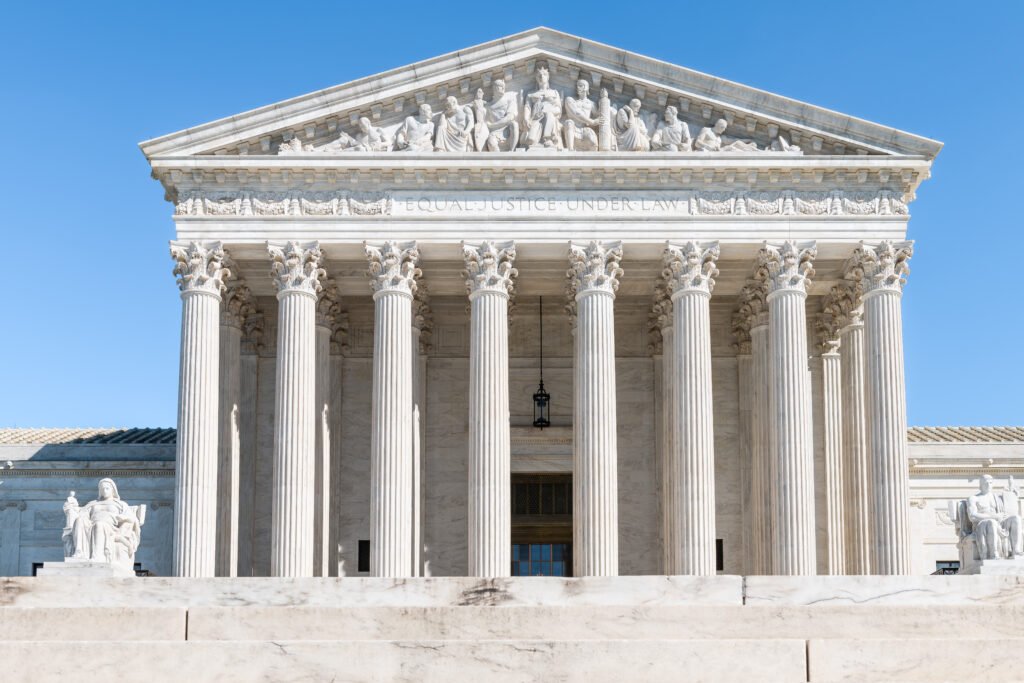
SCOTUS accepts sports event contract case by...?
December 31
Order Book
December 31
Resolution Criteria
This market will resolve to "Yes" if the Supreme Court of the United States grants certiorari in a case explicitly concerning the legality, regulation, or jurisdictional authority over sports event contracts by July 31, 2026, 11:59 PM ET. Otherwise, this market will resolve to "No." A case qualifies if it addresses at least one of the following: (1) whether contracts based on sporting event outcomes constitute regulated derivatives under the Commodity Exchange Act; (2) whether federal regulation via the Commodity Futures Trading Commission preempts state-level gambling laws as applied to such contracts; or (3) whether sports event contracts offered by federally licensed markets may legally be offered, restricted, or prohibited by federal or state authorities. The certiorari grant must be publicly confirmed via the official SCOTUS docket or orders list, and verifiable through credible legal reporting or the Supreme Court’s official website. The case does not need to be heard, scheduled, or decided to qualify. The resolution source will be a consensus census of credible reporting.
Prediction markets currently show the Supreme Court accepting a sports event contract case by July 2026 as a minority outcome, with somewhat more volume on the December 2026 deadline. The market is a two-outcome structure asking whether SCOTUS will grant certiorari in a qualifying case — one touching derivatives regulation, CFTC preemption, or federal licensing authority over sports event contracts — before the end of 2026. Resolution requires confirmation via the official SCOTUS docket or orders list.
Market structure
The market has two outcomes corresponding to two deadlines: a July 31, 2026 cutoff and a December 31, 2026 cutoff. Volume is broadly distributed but skewed toward the later deadline, suggesting the market prices the July window as the less probable path. Resolution requires a publicly confirmed certiorari grant on the SCOTUS docket or orders list, verifiable through credible legal reporting or the Supreme Court's official website. The underlying case does not need to be heard or decided, only accepted.
Background
Sports event contracts — instruments whose value is tied to sporting outcomes — have occupied a legal grey zone in the United States for years, sitting at the intersection of commodity derivatives law, state gambling statutes, and federal financial regulation. The Commodity Futures Trading Commission has at various points examined whether such contracts constitute regulated derivatives under the Commodity Exchange Act, prompting industry participants and state regulators to press for clarity. Recent expansions in prediction market activity, including federally licensed platforms seeking to offer election and sports contracts, have intensified the jurisdictional debate. No Supreme Court ruling has yet definitively addressed whether CFTC authority preempts state-level restrictions on these instruments, leaving a patchwork of regulatory treatment across jurisdictions and creating conditions under which a circuit split or high-profile lower court ruling could provide the vehicle for a certiorari petition.
Key factors
Several structural factors bear on whether SCOTUS accepts a qualifying case within the resolution window. First, a certiorari grant typically requires a petition already filed and docketed; the timeline depends on whether a suitable case has reached the petition stage in the lower courts. Second, the Court generally grants certiorari when there is a circuit split or a question of significant federal law left unresolved — the absence of such a split reduces the probability of a grant. Third, regulatory developments at the CFTC, including any rulemaking or enforcement actions that produce adverse appellate decisions, could accelerate the pipeline of qualifying petitions. Fourth, congressional activity addressing sports contracts or prediction markets could either moot potential cases or sharpen the legal questions courts must resolve. Fifth, the Court's own docket management and the timing of conference schedules affect whether a petition filed before July could be accepted within that window versus held to a later conference date, distinguishing the two resolution outcomes in this market.
FAQ
How is the SCOTUS sports event contract certiorari market resolved?
The market resolves Yes if the Supreme Court publicly grants certiorari in a qualifying case by the applicable deadline. The grant must appear on the official SCOTUS docket or orders list and be verifiable through credible legal reporting or the Court's official website. The case need not be scheduled, heard, or decided.
When does the SCOTUS sports event contract market resolve?
The market has two internal deadlines: July 31, 2026 for the earlier outcome and December 31, 2026 for the later outcome. The overall resolution deadline is 31 December 2026. A certiorari grant confirmed before July 31 would resolve the July outcome; one confirmed before December 31 resolves the December outcome.
What happens if a relevant case is filed but SCOTUS has not yet acted by the deadline?
A petition being filed or pending conference is not sufficient for resolution. The market requires a confirmed certiorari grant — meaning the Court has affirmatively agreed to hear the case — not merely a petition having been submitted or distributed for conference before the applicable deadline.
What does the market currently show for SCOTUS accepting a sports contract case?
Volume is concentrated on the December 2026 deadline rather than the July 2026 cutoff, making the later window the heaviest-backed outcome. Both remain minority positions overall, reflecting the market's view that a certiorari grant within 2026 is possible but not the dominant expectation.
Paridesk is not a regulated financial advisor. The information above is for informational purposes only and does not constitute financial, investment, or trading advice. Prediction markets carry risk of total loss. Past patterns do not guarantee future outcomes.
Related Markets






December 31
54%