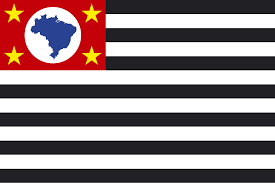
São Paulo Governor Election Winner
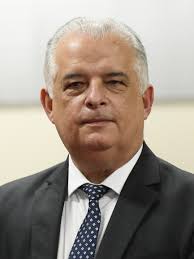
Tarcísio de Freitas




Order Book
Tarcísio de Freitas
Resolution Criteria
The São Paulo gubernatorial election is scheduled to take place in Brazil on October 4, 2026, with a runoff on October 25, 2026, if no candidate receives a majority of the valid votes in the first round. This market will resolve according to the candidate who wins this election. Temporary, interim, or placeholder governors appointed by any means before the specified election will not be considered. If the result of this election isn't known by June 30, 2027, 11:59 PM ET, the market will resolve to "Other". This market will resolve based on the result of the election, as indicated by a consensus of credible reporting. If there is ambiguity, this market will resolve based solely on the official results as reported by the Brazilian government, specifically the Superior Electoral Court (Tribunal Superior Eleitoral, TSE) (e.g., www.tse.jus.br/eleicoes/resultados-eleicoes).
Tarcísio de Freitas is the heavily-backed favourite to win the São Paulo Governor Election in prediction market trading, with volume overwhelmingly concentrated on his candidacy. Fernando Haddad and Kim Kataguiri attract the next most meaningful market interest, though both trail substantially. The election is scheduled for 4 October 2026, with a potential runoff on 25 October 2026, resolving according to the official result certified by Brazil's Superior Electoral Court.
Market structure
The market spans 25 named outcomes and is heavily concentrated on a single contender, Tarcísio de Freitas, with the remainder of the field sharing a small portion of total volume. A second-round runoff mechanism applies if no candidate secures a majority in the first round. Resolution is sourced from credible reporting consensus or, where ambiguous, the official Tribunal Superior Eleitoral (TSE) results. A fallback deadline of 30 June 2027 applies, after which an unresolved market defaults to 'Other'.
Background
São Paulo is Brazil's most populous state and its dominant economic engine, accounting for roughly a third of national GDP. The governorship consequently carries significant political weight at both state and federal levels. Tarcísio de Freitas, a former federal minister and infrastructure technocrat, won the 2022 São Paulo gubernatorial election as a Bolsonarista candidate and has since become one of the most prominent figures on Brazil's right, frequently discussed in national political commentary as a potential future presidential contender. His incumbency and high name recognition define the structural context of this race. The 2026 cycle coincides with federal elections, meaning São Paulo's gubernatorial contest will unfold alongside presidential and congressional campaigns, amplifying its national visibility and the strategic calculations of all major parties.
Key factors
Tarcísio de Freitas's incumbency provides significant structural advantages, including visibility, resource access, and the ability to point to a governing record. However, incumbency can also attract accountability scrutiny, particularly on public security, infrastructure delivery, and fiscal management — areas central to São Paulo's policy debate. The composition of opposition candidacies matters considerably: a fragmented opposition benefits the leading candidate in a first-round scenario, while opposition consolidation could force a competitive runoff. Fernando Haddad's presence in market pricing reflects his prior electoral history in São Paulo, including his 2012 mayoral tenure and subsequent federal career, though his ultimate candidacy in this race remains subject to political developments. The PT-led federal government's relationship with São Paulo's state administration may frame the ideological contrast driving voter choice. Runoff dynamics, should they materialise, could significantly redistribute market probabilities depending on which candidates qualify and whether alliance-building reshapes the second-round contest.
FAQ
How is the São Paulo Governor Election market resolved?
The market resolves to whichever candidate wins the election, as confirmed by a consensus of credible reporting. Where reporting is ambiguous, the official result published by Brazil's Superior Electoral Court (Tribunal Superior Eleitoral, TSE) at tse.jus.br serves as the definitive source.
When does the São Paulo Governor Election market resolve?
The first-round election is scheduled for 4 October 2026. If a runoff is required, it takes place on 25 October 2026. The market resolves once a winner is confirmed. If no result is known by 30 June 2027, the market resolves to 'Other'.
What happens if the São Paulo election result is disputed or delayed?
If the official result remains unknown by 30 June 2027 at 11:59 PM ET, the market resolves to 'Other'. Temporary or interim governors appointed outside the electoral process are explicitly excluded and do not trigger resolution.
What does the São Paulo Governor Election market currently show?
Market volume is overwhelmingly concentrated on incumbent Tarcísio de Freitas, making him by far the heaviest-backed outcome. Fernando Haddad and Kim Kataguiri hold the next most notable positions, with the remaining 25 outcomes sharing a small fraction of total volume.
Paridesk is not a regulated financial advisor. The information above is for informational purposes only and does not constitute financial, investment, or trading advice. Prediction markets carry risk of total loss. Past patterns do not guarantee future outcomes.
Related Markets






Tarcísio de Freitas
92%