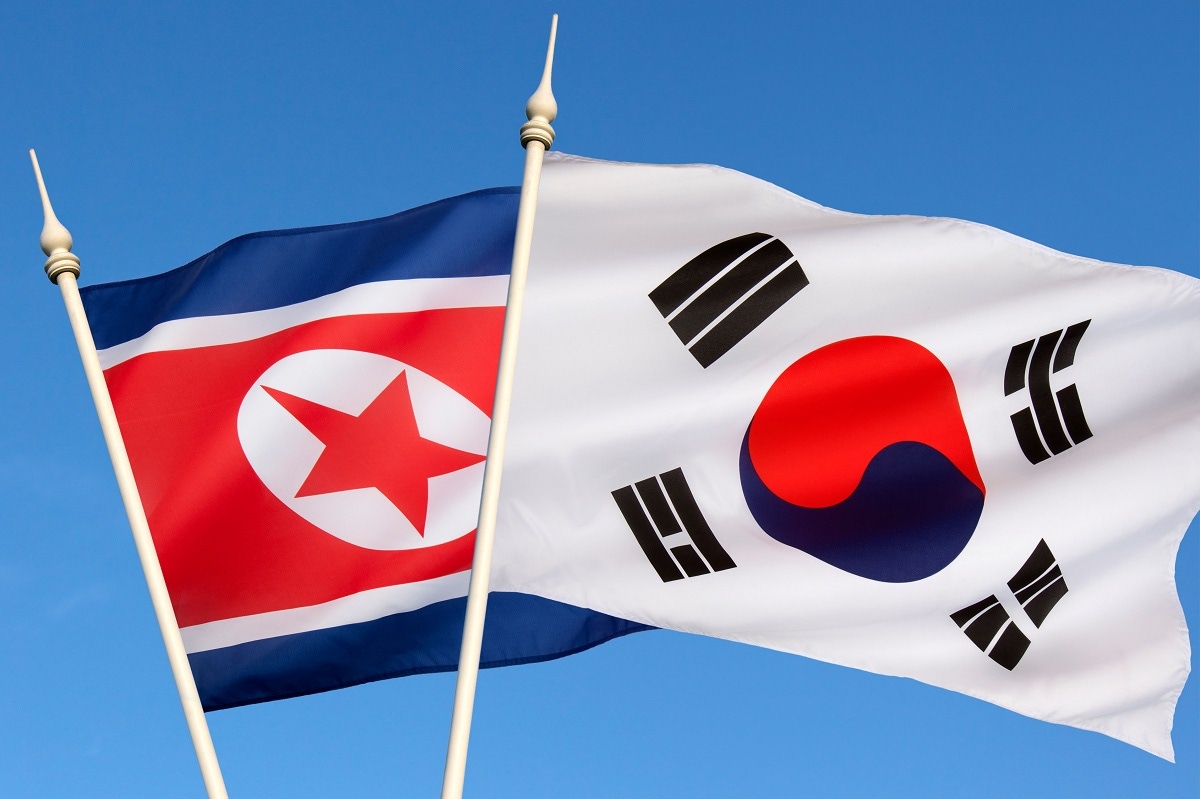
Will North and South Korea engage in direct talks by...?
December 31
Order Book
December 31
Resolution Criteria
This market will resolve to "Yes" if, North and South Korea engage in direct talks, defined as an official meeting or communication between government representatives of both sides, conducted without a third-party relaying messages, by June 30, 2026 at 11:59 PM ET. Otherwise this market will resolve to “No”. The talks may be in-person, by phone, or virtual, and must be publicly acknowledged by either government or reported by credible media. Routine military deconfliction, backchannel exchanges, or talks conducted entirely through another country or organization will not count. The resolutions source will be a consensus of credible reporting.
Prediction markets place this question firmly in the 'No' camp, with volume heavily concentrated against direct North-South Korean talks occurring before 30 June 2026. The market reflects the near-complete breakdown in inter-Korean communication channels in recent years. Resolution requires a publicly acknowledged, direct government-to-government meeting or communication — in person, by phone, or virtual — before the deadline.
Market structure
This is a binary Yes/No market resolving on whether direct inter-Korean talks occur by 30 June 2026 at 11:59 PM ET. Volume is overwhelmingly concentrated on the 'No' outcome. Resolution requires official contact between government representatives of both sides, without third-party relay, acknowledged by either government or credible media reporting. Routine military deconfliction, backchannel exchanges, and third-country-mediated contacts explicitly do not qualify.
Background
Inter-Korean relations have deteriorated sharply since the collapse of the Hanoi summit between Kim Jong-un and Donald Trump in February 2019. Pyongyang severed all official hotlines with Seoul in June 2020 and subsequently demolished the Inter-Korean Liaison Office in Kaesong. South Korea's attempts to restore communication lines have gone unanswered on multiple occasions. North Korea has in recent years formally amended its constitution to define South Korea as a hostile foreign state, signalling a doctrinal shift away from the goal of eventual reunification. Against this backdrop, no substantive direct talks have taken place for several years, and Pyongyang has shown no public indication of willingness to re-engage Seoul bilaterally.
Key factors
Several structural factors bear on whether direct talks could materialise before the deadline. First, Pyongyang's stated policy of treating South Korea as a separate, hostile nation reduces the political incentive for bilateral engagement. Second, the broader US-North Korea diplomatic environment matters: any thaw in Washington-Pyongyang relations could create conditions for inter-Korean contact, but progress on that front would need to develop rapidly within the timeframe. Third, South Korea's domestic political situation — including the constitutional court and presidential succession dynamics — affects Seoul's capacity and mandate to initiate diplomatic overtures. Fourth, any humanitarian crisis, natural disaster, or security incident on the peninsula could either prompt emergency communication or harden barriers further. Fifth, the resolution criteria exclude third-party-mediated contact, meaning any resumption of talks through China or international organisations would not qualify, narrowing the viable pathways considerably.
FAQ
How is the North-South Korea direct talks market resolved?
The market resolves 'Yes' if an official meeting or direct communication occurs between government representatives of both Koreas — in person, by phone, or virtually — without a third party relaying messages, and is publicly acknowledged by either government or credible media. Military deconfliction, backchannel exchanges, and third-country-mediated contacts do not count.
When does the North and South Korea talks market resolve?
The market resolves on 30 June 2026, with a cut-off of 11:59 PM Eastern Time. Any qualifying direct contact must occur and be publicly acknowledged before that deadline. The resolution source is a consensus of credible media reporting.
Would talks mediated by China or the United Nations count towards resolution?
No. The resolution criteria explicitly exclude talks conducted entirely through another country or organisation. Contact must be direct — government representatives of both sides communicating without a third party relaying messages — to qualify for a 'Yes' resolution.
What does the market currently show for North-South Korea talks?
Volume is overwhelmingly concentrated on the 'No' outcome, making this one of the most lopsided markets in the inter-Korean diplomatic space. The implied market consensus reflects the prolonged breakdown in official communication channels and Pyongyang's stated policy of treating South Korea as a hostile foreign state.
Paridesk is not a regulated financial advisor. The information above is for informational purposes only and does not constitute financial, investment, or trading advice. Prediction markets carry risk of total loss. Past patterns do not guarantee future outcomes.
Related Markets



December 31
14%